Why Early 2026 Could Feel Financially Tight
The beginning of a new year often brings higher expenses. Winter heating bills increase in many states, and holiday credit card balances are still being paid off. At the same time, food and everyday essentials remain expensive. In this situation, a one-time $2,000 payment could help families cover urgent costs and regain some stability. While it would not solve long-term financial challenges, it could ease immediate stress.
How the Payment Could Be Used
A deposit of this size may help households catch up on rent or mortgage payments. Others might use it for electricity bills, medical costs, groceries, or insurance premiums. Families with high-interest debt could reduce credit card balances and save money on future interest charges. Some individuals may place part of the funds into emergency savings. Even a small savings cushion can make a difference when unexpected expenses arise.
Who May Qualify
If approved, eligibility would likely depend on income level, tax filing status, and recent tax return information. The Internal Revenue Service would typically use adjusted gross income from the latest filed return to determine qualification. Low- and middle-income taxpayers are often prioritized in relief programs. Beneficiaries of the Social Security Administration, including retirement and disability recipients, may also be considered. Certain veterans receiving benefits from the Department of Veterans Affairs could be included under standard guidelines.
How Payments Are Usually Sent
Federal payments are commonly distributed in phases rather than all at once. Direct deposits are usually processed first for individuals with updated banking details on file. Paper checks or prepaid debit cards may be mailed later, which can take additional time. Electronic deposits are generally faster and more secure once approved and processed.
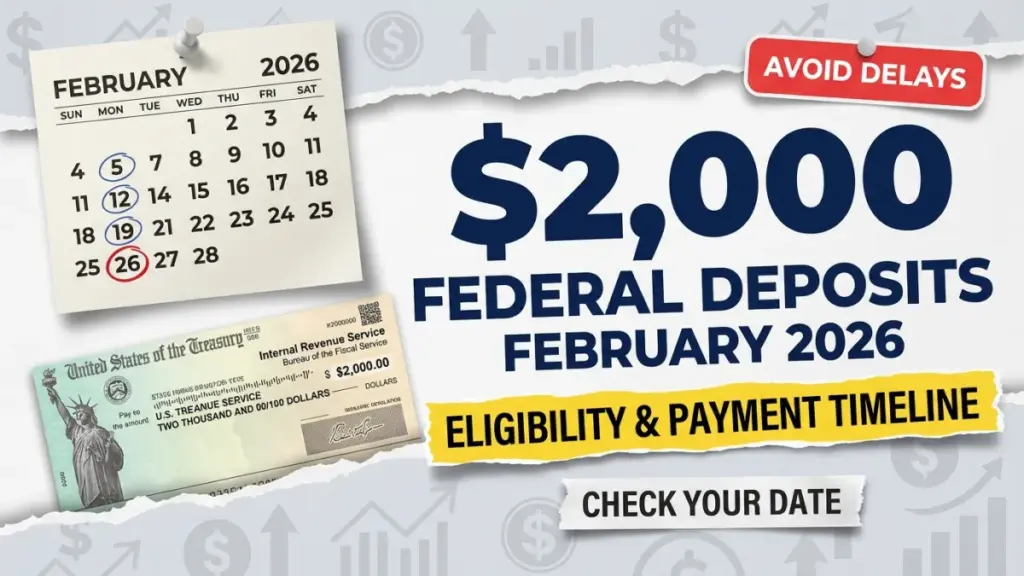
A potential $2,000 direct deposit in February 2026 could provide helpful short-term relief during a financially demanding season. While official approval and final details would depend on government decisions, staying informed and keeping tax records updated can reduce delays and confusion.
Disclaimer
This article is for general informational purposes only. Payment amounts, eligibility rules, and distribution timelines depend on official government announcements and individual tax records. Readers should verify information through authorized IRS sources or consult a qualified financial professional before making decisions.